Retro Geometric Cultural Poster
A stylized graphic design prompt for creating high-contrast, layered retro posters with heavy geometric elements and carved typography, suitable for cultural and futuristic themes.
Exemplo gerado
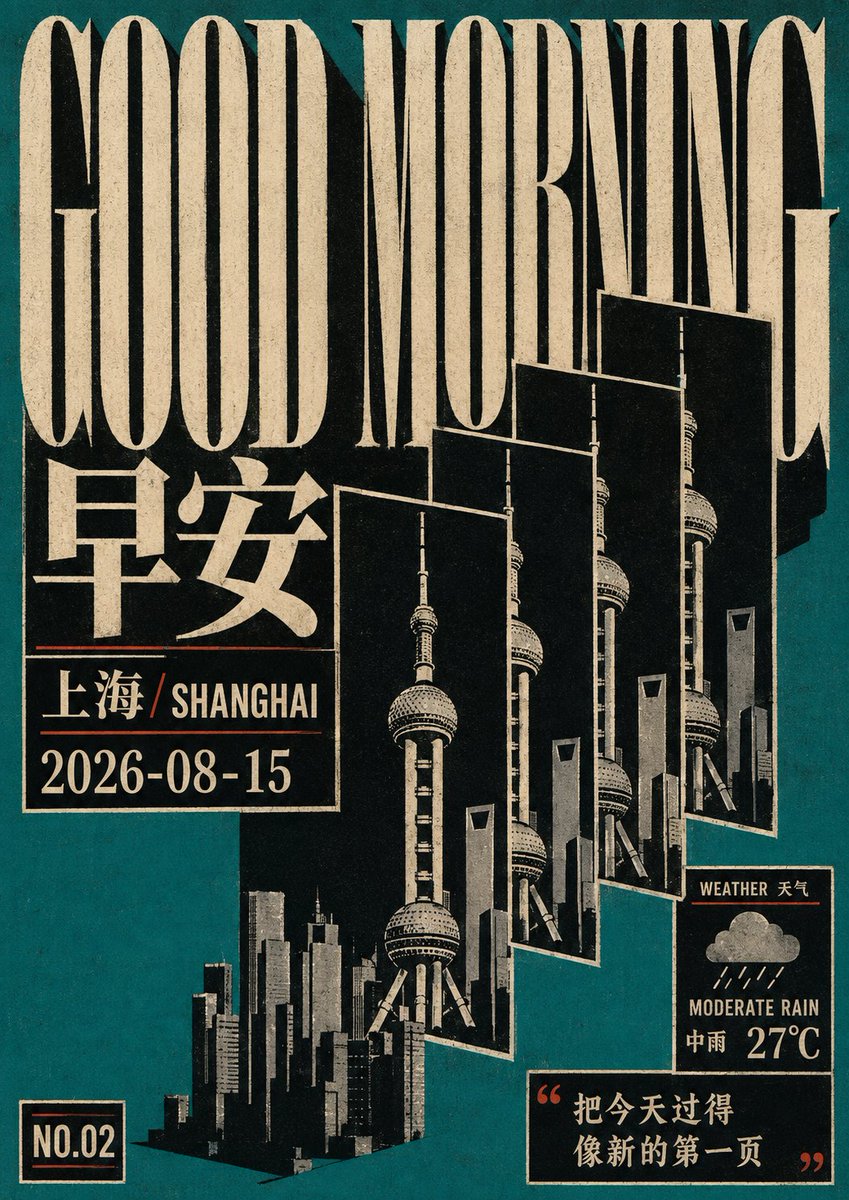
Prompt
Construct {argument name="subject" default="any futuristic theme"} into a black-background, strongly flattened retro cultural poster: at first glance, see a large-scale high-contrast {argument name="title" default="headline"} and a group of {argument name="thematic graphics" default="thematic graphics"} repeating along depth and misaligned layer by layer. The text and images together form an oppressive black-and-white geometric composition rather than independent information zones. Carry heavy warm white characters on a near-pure black background, using a small amount of dark reddish-brown or old gold only for thin horizontal lines, explanatory text, and slight emphasis; let the main title occupy the primary visual weight at the top. Information is divided into several nested cards with black backgrounds and white borders, interspersed with thematic objects along diagonal or stepped paths, creating a spatial rhythm like printed layouts being continuously copied, ghosted, or misprinted. The subject of the futuristic theme should be disassembled into repeatable outlines, borders, or stacked slices, sharing the same hard-edged ink logic with cards, titles, and thin lines, forming a relationship of mutual blocking, interspersing, and nesting. The glyphs adopt a high-contrast, narrow, and carved construction: the main strokes are heavy, the horizontal and vertical strokes have obvious thickness contrast, the endpoints are sharp or slightly irregular, the turns are hard, and the inner chambers are narrow but maintain long-distance recognition; regardless of how the text system changes, maintain tight letter spacing, strong line spacing contrast, and a reading beat from large titles to small annotations, letting punctuation, stress marks, or other textual marks follow the overall geometric axis. The images retain only a few forms that can support theme identification, using layers of black, gray, and warm white with tough outlines, adding no soft gradients, commercial-grade polishing, or decorative details. Retain restrained traces of low-resolution reproduction, slight misalignment, rough edges, local uneven inking, and old printing, but do not create severe damage out of thin air; the whole must look like a graphic system completed by limited ink, repeated screens, and manual typesetting.